
How to Choose an Offshore Vessel Support Company in Nigeria
Choosing the right offshore vessel support company is a critical decision for oil and gas operators, EPC contractors, marine logistics teams, and offshore project managers. Offshore vessel support involves the vessels, crew, equipment, logistics, safety systems, and technical coordination needed to keep offshore operations running safely and efficiently.
In Nigeria, offshore oil and gas operations depend heavily on marine support because platforms, rigs, FPSOs, terminals, and subsea assets require constant movement of personnel, equipment, fuel, water, cargo, and emergency response resources. NIMASA regulates and oversees maritime activities in Nigerian waters, while NUPRC’s offshore safety permit system supports personnel tracking for workers operating in onshore and offshore oil and gas locations.
Selecting the wrong vessel support company can lead to delays, safety failures, regulatory issues, damaged cargo, poor crew management, and expensive downtime. The right partner, however, improves operational continuity, protects assets, supports compliance, and strengthens offshore productivity.
What Is Offshore Vessel Support?
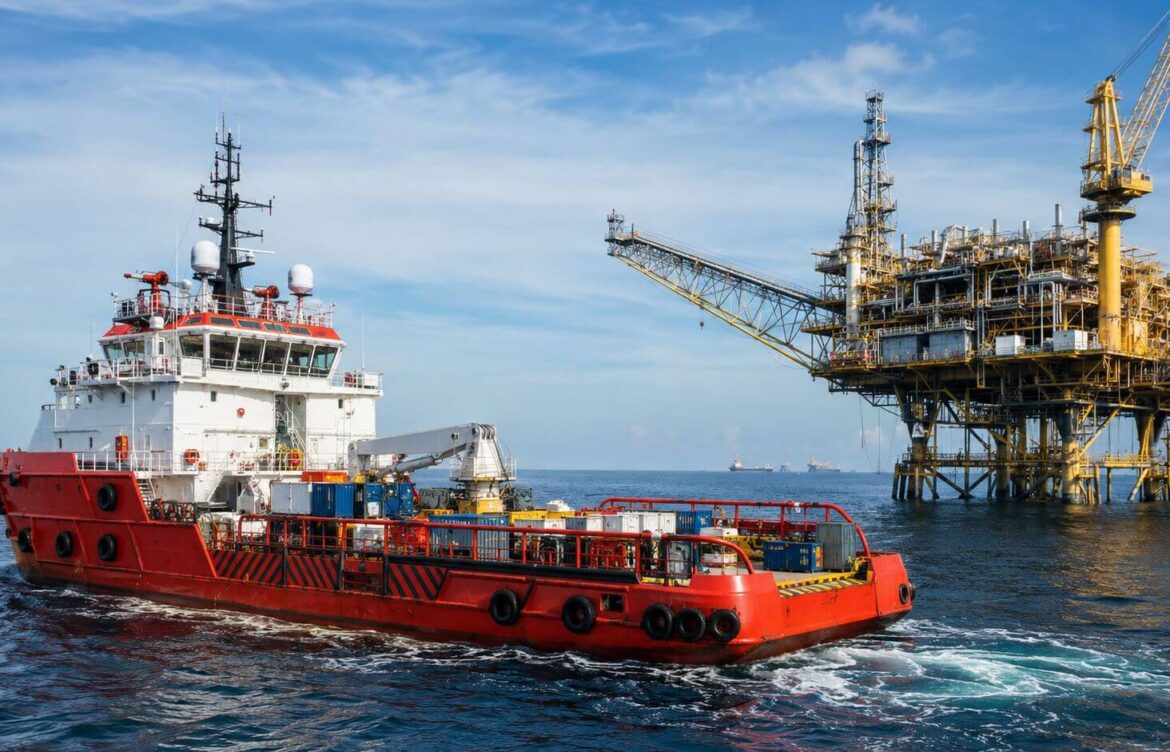
Offshore vessel support refers to the use of specialized marine vessels and support teams to serve offshore oil and gas operations. These services include cargo delivery, crew transfer, anchor handling, towing, emergency response, offshore construction support, subsea inspection support, security patrol, bunkering, and waste evacuation.
Common vessels used for offshore vessel support include platform supply vessels, anchor handling tug supply vessels, crew boats, security patrol boats, standby rescue vessels, diving support vessels, and multipurpose support vessels. Each vessel has a specific role, and the right company must know which vessel is suitable for each offshore assignment.
In Nigeria, offshore vessel support is not just about having boats. It is about having the right vessels, qualified crew, valid permits, safety procedures, operational experience, and local knowledge.
Why Choosing the Right Offshore Vessel Support Company Matters
Offshore oil and gas operations are time-sensitive and capital-intensive. A delayed vessel can stop drilling activity. A poorly maintained vessel can create safety risks. Weak documentation can affect regulatory approval. An untrained crew can expose personnel and equipment to danger.
This is why companies looking for offshore vessel support in Nigeria should focus on capacity, compliance, safety, experience, and reliability. Nigeria’s offshore sector remains strategically important, with continued activity around offshore fields, floating storage systems, and future drilling plans. For example, Nigeria commissioned the FSO Cawthorne in 2025 to improve crude evacuation around the Bonny export area, while Chevron announced plans to deploy a drilling rig in Nigeria by late 2026.
These developments show that offshore logistics and vessel support will remain essential to Nigeria’s oil and gas value chain.
1. Check Regulatory Compliance First
The first thing to check is compliance. A professional offshore vessel support company in Nigeria should have the required documentation to operate legally and safely.
Ask for evidence of relevant maritime and oil and gas permits, vessel certificates, crew certifications, insurance documents, safety records, and client-specific approvals. NIMASA is responsible for regulating maritime activities in Nigerian waters, including maritime safety and seafarer standards.
For offshore personnel movement, confirm that the company understands NUPRC’s offshore safety permit requirements. The OSP system is designed for personnel accountability and tracking in Nigeria’s oil and gas industry.
Do not assume that a company is compliant because it owns vessels. Always request documents and verify them before signing a contract.
2. Review Vessel Capacity and Suitability
Not every vessel can perform every offshore task. A crew boat is suitable for personnel transfer, but it cannot replace a platform supply vessel for heavy cargo delivery. A security patrol boat cannot perform anchor handling. A diving support vessel is different from a standby rescue vessel.
Before choosing a provider, define your operational need clearly. Are you moving crew? Supplying an offshore platform? Supporting a drilling rig? Providing security escort? Handling emergency response? Supporting subsea inspection?
Then check whether the company has vessels that match the job. Review vessel size, deck capacity, speed, endurance, fuel capacity, communication systems, navigation equipment, safety equipment, crane support, and accommodation capacity where relevant.
A good offshore vessel support company should not force one vessel to do every job. It should recommend the right vessel for the right operation.
3. Assess Safety Management Systems
Safety is one of the most important factors in offshore vessel support. Offshore work involves heavy equipment, open sea conditions, personnel transfer risks, fire hazards, medical emergencies, and environmental exposure.
Ask the company for its Health, Safety, Security, and Environment policy. Check its incident history, emergency response procedure, man-overboard procedure, fire response plan, risk assessment process, and crew training records.
A reliable provider should conduct pre-sailing checks, toolbox meetings, vessel inspections, voyage planning, weather assessment, and emergency drills. The company should also understand offshore permit-to-work systems and client safety expectations.
In offshore operations, safety must be practical, not decorative. A company may have a written safety policy, but the real question is whether its crew follows safety procedures during actual operations.
4. Confirm Crew Competence and Experience
A vessel is only as reliable as the people operating it. Before hiring an offshore vessel support company in Nigeria, review the competence of its captains, engineers, deck officers, ratings, safety officers, marine coordinators, and technical personnel.
The crew should understand offshore navigation, cargo handling, personnel transfer, radio communication, emergency response, and client reporting. For specialized tasks such as anchor handling, towing, diving support, or subsea support, the company must provide experienced personnel with relevant technical competence.
Ask for crew certifications, training records, medical fitness records, and offshore experience. For Nigerian offshore work, local terrain knowledge is also valuable. Operators who understand local ports, terminals, offshore routes, weather patterns, and security risk areas can plan more effectively.
5. Evaluate Maintenance and Vessel Condition
A poorly maintained vessel can delay your project and expose your operation to unnecessary risk. Before hiring, ask for maintenance records, dry-docking history, inspection reports, equipment certificates, engine condition reports, and recent vessel survey documents.
Physical inspection is also important where possible. Check the condition of the deck, engine room, navigation equipment, safety gear, firefighting systems, lifesaving appliances, communication systems, and accommodation areas.
Do not rely only on photographs or company claims. Offshore vessel support requires operational readiness. A vessel should be ready to perform safely, not merely appear available.
6. Consider Local Content and Nigerian Industry Participation
Local content is important in Nigeria’s oil and gas sector. The Nigerian Content Development and Monitoring Board was established under the Nigerian Oil and Gas Industry Content Development Act to drive local capacity in the oil and gas industry.
When choosing an offshore vessel support company, consider whether the provider supports Nigerian manpower, local vessel participation, indigenous capacity, and compliance with Nigerian content expectations. This is especially important for oil and gas clients that must demonstrate commitment to local industry development.
A strong Nigerian marine support partner can help clients meet operational goals while also supporting local capacity growth.
7. Check Response Time and Operational Reliability
In offshore operations, timing matters. A good offshore vessel support company should be able to mobilize quickly, communicate clearly, and deliver according to schedule.
Ask about vessel availability, shore base access, logistics planning, spare vessel options, emergency call-out capacity, and communication channels. The company should have a clear process for handling urgent requests, voyage updates, cargo changes, crew changes, and incident reporting.
Reliability is not only about owning vessels. It is about coordination, planning, discipline, and accountability.
8. Compare Cost Against Value, Not Just Price
Price is important, but the cheapest option is not always the best option. Low-cost providers may cut corners on maintenance, crew training, insurance, safety equipment, or documentation.
When comparing quotes, check what is included. Does the price cover fuel, crew, insurance, permits, security, standby time, mobilization, demobilization, port charges, or emergency support? Are there hidden charges? What happens if the vessel breaks down?
The best choice is the company that offers the strongest balance of safety, compliance, vessel suitability, reliability, and cost control.
Questions to Ask Before Hiring
Before selecting an offshore vessel support company in Nigeria, ask these questions:
- What vessel types do you operate or manage?
- Are your vessels certified and properly insured?
- Do you have valid regulatory permits?
- What offshore oil and gas projects have you supported?
- What is your emergency response procedure?
- How do you manage crew competence and safety training?
- Can you provide maintenance and inspection records?
- How quickly can you mobilize?
- Do you understand Nigerian offshore safety and local content requirements?
- Can you provide references from previous clients?
Conclusion
Choosing the right offshore vessel support company requires careful evaluation of compliance, vessel capacity, safety systems, crew competence, maintenance standards, local content alignment, response time, and commercial transparency.
Offshore vessel support is not a basic transport service. It is a mission-critical part of offshore oil and gas operations. The right company helps you move people, cargo, equipment, and emergency resources safely across Nigerian waters. The wrong company can expose your project to delays, regulatory issues, financial losses, and avoidable safety risks.
For Nigerian offshore operators, the best marine partner is not simply the one with available vessels. It is the one with the right vessels, the right crew, the right permits, and the right operational discipline to support offshore work safely and professionally.